

In today’s world of endless health trends and superfoods, it’s easy to get lost in the noise. One item that often pops up in the conversation around clean eating is brown rice. It’s commonly viewed as a healthier alternative to white rice, but is that reputation truly deserved? Let’s explore the brown rice benefits, bust some common myths, and uncover surprising facts you probably didn’t know. Whether you’re a health-conscious foodie or just someone trying to make smarter dietary choices, this blog is for you.
What Exactly Is Brown Rice?
Before we jump into the nutrition talk, let’s understand what brown rice is.
Brown rice is a whole grain. Unlike white rice, which has had its bran and germ removed during processing, brown rice keeps those nutrient-rich layers intact. That’s the key difference—and the reason behind its health reputation.
But just because something is whole grain doesn’t automatically mean it’s the best option for everyone. Let’s dive deeper.
Brown Rice Benefits: Why People Are Making the Switch
Here’s a breakdown of the most widely discussed brown rice benefits—and why you might want to give it a spot on your plate:
1. Rich in Dietary Fiber
Brown rice contains significantly more fiber than white rice. Fiber plays a major role in:
- Supporting digestion
- Preventing constipation
- Keeping you fuller for longer
- Managing cholesterol levels
If you’re aiming for better gut health or looking to manage your weight, this added fiber is a game-changer.
2. A Source of Essential Nutrients
Brown rice isn’t just fiber—it also offers:
- Magnesium (for muscle function and heart health)
- Phosphorus (for strong bones)
- Selenium (a powerful antioxidant)
- B vitamins (to boost metabolism and energy)
These nutrients are often stripped during the refining process that turns brown rice into white rice.
3. Better Blood Sugar Control
Thanks to its low glycemic index, brown rice digests more slowly, preventing sudden spikes in blood sugar. This makes it especially beneficial for:
- People with type 2 diabetes
- Those at risk of insulin resistance
- Anyone trying to avoid energy crashes during the day
4. Heart-Healthy Choice
Whole grains like brown rice have been shown to reduce the risk of heart disease. The high fiber, antioxidants, and plant compounds in brown rice can help:
- Lower LDL (bad cholesterol)
- Reduce inflammation
- Improve overall cardiovascular health
Shocking Nutrition Facts You Should Know
While brown rice is healthy, there are some lesser-known facts worth considering.
1. Brown Rice Contains Arsenic
Like many plants, rice can absorb arsenic from soil and water. Brown rice tends to have higher levels than white rice because the outer layers are left intact.
What you can do:
- Rinse rice thoroughly before cooking
- Use extra water (a 6:1 water-to-rice ratio) and drain the excess
- Avoid eating it in large quantities every day
2. It May Affect Mineral Absorption
Brown rice contains phytic acid, which can bind to minerals like iron and zinc, making them harder to absorb. This is mainly a concern if:
- You eat a lot of brown rice and little else
- You have a nutrient deficiency
Soaking or fermenting brown rice before cooking can help reduce phytic acid levels.
What About Brown Rice Cakes?
If you’re someone who loves snacking, you’ve probably seen brown rice cakes on supermarket shelves. But are they healthy?
Brown rice cakes are:
- Low in calories
- Gluten-free
- Quick and convenient
However, keep in mind:
- They may not be very filling on their own
- Some brands add salt, sugar, or artificial flavors
Tip: Top your brown rice cake with almond butter, avocado, or hummus to make it more nutritious and satisfying.
Is Brown Rice Good for Everyone?
While brown rice benefits are impressive, it’s important to remember that no food is perfect for everyone.
You might want to limit brown rice if:
- You have digestive issues and struggle with fiber
- You follow a low-fiber or low-oxalate diet
- You are managing arsenic exposure from other foods
Otherwise, for most healthy adults, brown rice is a smart choice, especially when paired with other whole foods like vegetables, legumes, and lean protein.
How to Add Brown Rice to Your Diet
Here are some delicious and easy ways to include brown rice in your meals:
- Use it as a base for Buddha bowls or stir-fries
- Swap it with white rice in your favorite dishes like pulao or fried rice
- Make homemade brown rice cakes with mashed veggies and spices
- Blend it into soups or stews for a hearty texture
Final Thoughts: So, Is Brown Rice Really Healthier?
Absolutely, with a few considerations.
Brown rice is nutrient-dense, fiber-rich, and versatile, making it a smart addition to most diets. But like all foods, balance is key. Enjoy it in moderation, prepare it properly, and combine it with various whole foods for the best results.
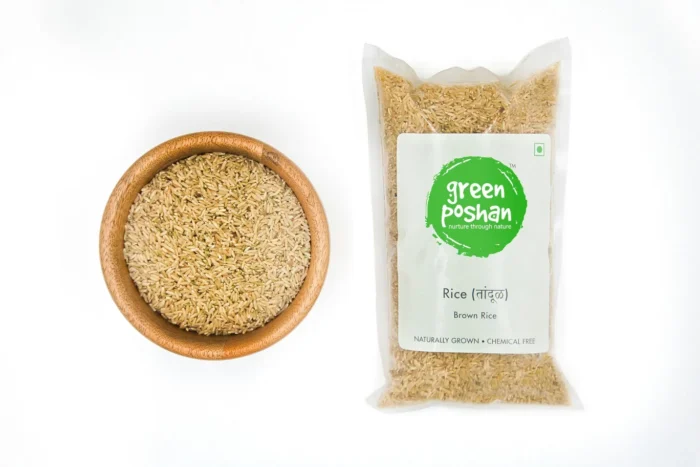
Brown Rice — 500g
Brown rice is a nutritious whole grain known for its rich fiber content and earthy flavor. Unlike white rice, brown rice retains its bran and germ layers, making it a healthier choice for those who prefer wholesome eating. At Green Poshan, our 500g brown rice is naturally sourced, minimally processed, and hygienically packed to ensure every meal you make is filled with nourishment and taste.
Whether you’re switching to a healthier diet or simply looking for variety in your grains, brown rice makes a satisfying, nutrient-rich addition to your daily meals. Use it in pulao, salads, buddha bowls, or just a simple dal-chawal combo – the possibilities are endless.