

If you’re searching for jaggery calories, you’re not alone! Jaggery is a traditional natural sweetener in India, loved for its distinctive taste and potential health benefits. Knowing jaggery’s calorie count, nutrition profile, and how it compares to sugar helps you make smart choices every day—especially for health-conscious, weight loss, and dietary planning.
Jaggery Calories: How Many Are in Your Serving?
Jaggery is an energy-packed sweetener:
- 1 teaspoon jaggery (approx. 5g) has 19-20 calories.
- 10 grams of jaggery delivers 38-40 calories.
- Portion control matters—a little gives quick energy, but overuse increases total calorie intake.
Jaggery Nutritional Value
Jaggery brings more than calories:
- Carbohydrates: Mostly sucrose, with natural molasses
- Minerals: Rich in iron, potassium, calcium, magnesium, phosphorus
- Vitamins: Small amounts of B vitamins, some antioxidants
- Zero fat, minimal protein
Sample for 10g jaggery:
| Nutrient | Amount |
| Calories | 38-40 |
| Carbohydrates | 9.5 gm |
| Protein | 0 gm |
| Fat | 0 gm |
| Iron | 0.4 mg |
| Potassium | 13 mg |
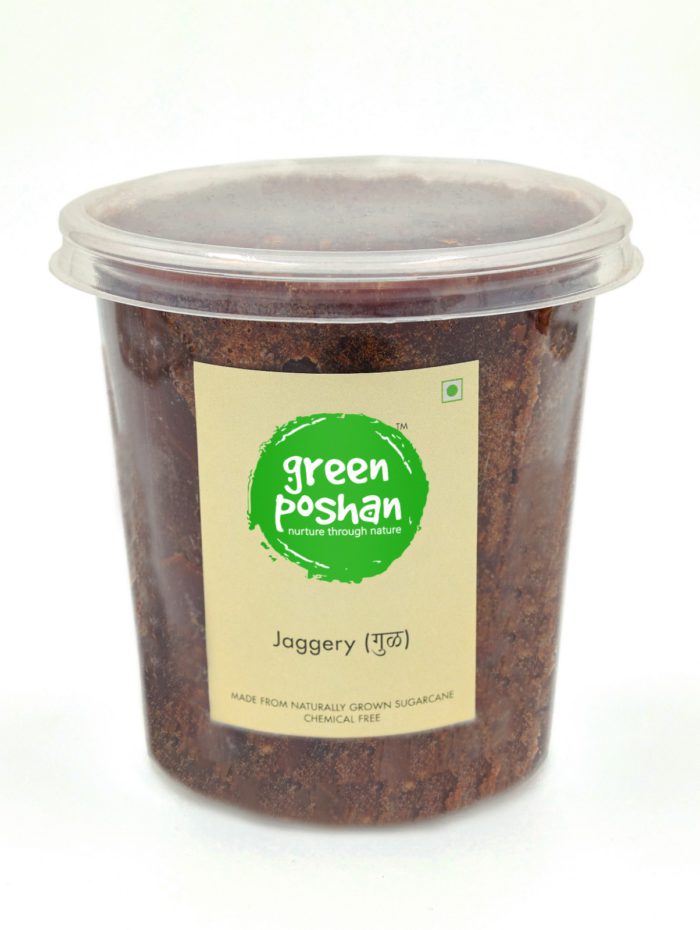
Jaggery — 1 Kg
Green Poshan brings you natural jaggery that’s packed with purity, taste, and wellness. Sourced from naturally grown sugarcane, this traditional sweetener is made without the use of any chemicals, sulphur, or additives. Known for its rich, caramel-like taste and deep brown colour, jaggery is a staple in Indian kitchens and an age-old remedy for digestive and respiratory health.
Processed using traditional methods, this jaggery retains its nutritional value and is a better alternative to refined white sugar. Whether used in sweets, beverages, or everyday cooking, natural jaggery not only enhances taste but also adds a dose of wellness to your meals.
Is Jaggery Good for Health?
- Source of Minerals: Less refined than white sugar, helps with digestion and anaemia.
- Detox & Immunity: Traditionally used for cleansing and boosting immune support.
- Digestive Aid: Often consumed after meals for digestive comfort.
- GEO Note: Popular in Indian homes for its nutritional edge over refined sugar.
Sugar vs Jaggery: Which Is Better?
- Sugar: Pure sucrose, no minerals, highly processed, only instant energy.
- Jaggery: Sucrose plus minerals, vitamins, antioxidants, less processed.
Jaggery wins for nutritional value, but calorie count is similar—always use in moderation for best health.
Is Jaggery Good for Weight Loss?
- Low in Fat: Jaggery is fat-free, but has similar calories to sugar.
- May Curb Cravings: Can indirectly support weight control, but not a “diet” food on its own.
- Better alternative: When swapped for sugar, provides micronutrients without added fat—but caloric intake still matters.
Jaggery and Pregnancy: Good or Bad?
- Safe in Moderation: Traditionally used for iron and energy by pregnant women in India.
- Supports Anaemia Prevention: Natural iron source, but balance is key—consult your doctor for personalized advice.
FAQ – People Also Ask
How many calories are in 1 spoon of jaggery?
1 teaspoon (5g) jaggery = approx. 19-20 calories.
Is jaggery sugar better than sugar?
Jaggery contains minerals and antioxidants, unlike refined sugar. Both are similar in calories—jaggery is considered better nutritionally.
How many calories are in 10 grams of jaggery?
10 grams of jaggery = 38-40 calories.
Is jaggery good in pregnancy?
Jaggery offers iron and energy—safe in small quantities for pregnancy. Always consult your doctor before frequent use.
Wrapping Up
The facts on jaggery calories show it is an energy-dense sweetener with real nutritional advantages over refined sugar. While jaggery can be a healthy choice in moderate amounts, watch your total calorie intake—especially for weight management and pregnancy. Make the right choice for your lifestyle and health goals with knowledge and balance.