

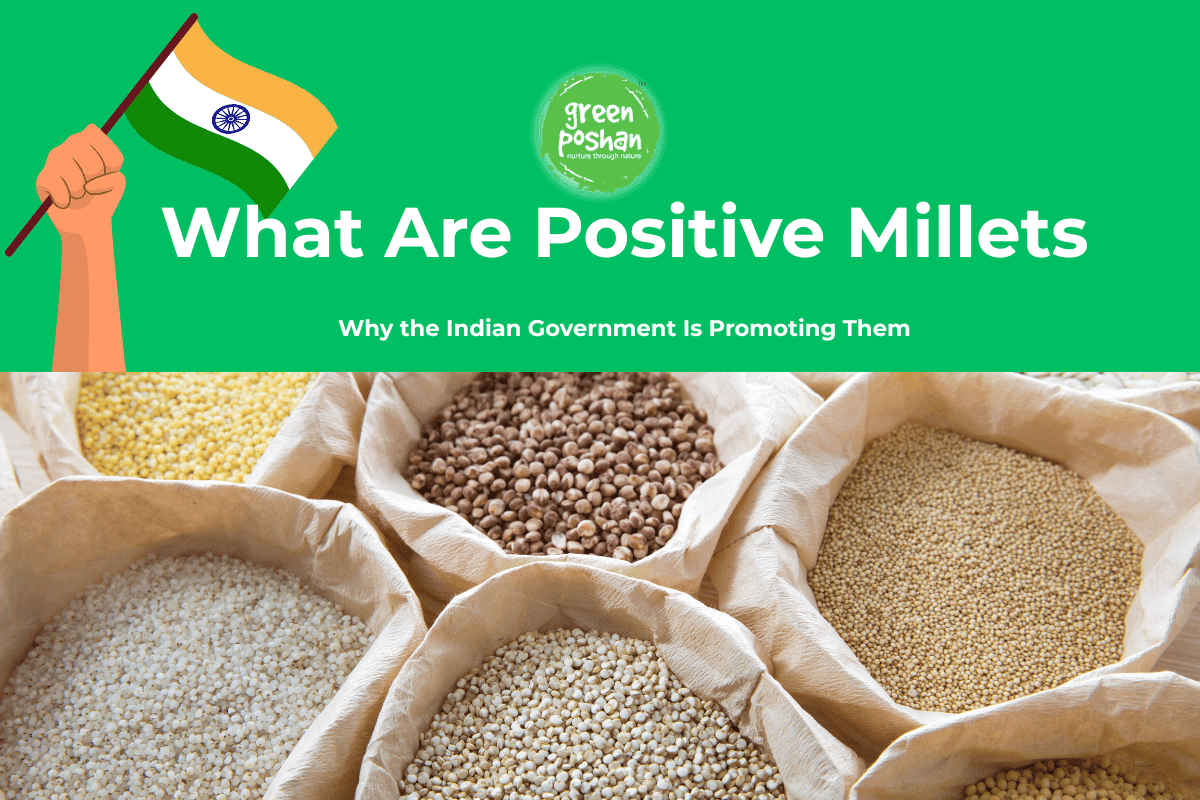
In recent years, there has been a growing conversation around reviving traditional Indian grains, especially positive millets. These age-old crops are finally receiving the attention they deserve, not just from health experts and nutritionists, but also from the Indian government, which is actively promoting them through national policies and campaigns.
But what exactly are positive millets? Why are they being hailed as the future of Indian food security and wellness? And how is a natural brand like Green Poshan helping bring these grains back to your plate?
Let’s explore in depth.
What Are Positive Millets?
These are small-seeded, nutrient-rich grains that are naturally grown and require minimal inputs. Unlike rice or wheat, which are high in simple carbohydrates and offer limited nutrients, positive millets are loaded with:
- Dietary fiber
- Plant-based protein
- Iron, calcium, and magnesium
- B-complex vitamins
- Antioxidants and polyphenols
The term “positive” is used to highlight their superior impact on human health and the environment. These millets are low glycemic index (GI) foods, meaning they help regulate blood sugar levels and support long-term energy release.
Types of Positive Millets
The Indian government categorizes the following as positive millets:
- Kodo Millet – Great for diabetics and heart health
- Foxtail Millet – Rich in iron and fiber
- Little Millet – Lightweight, great alternative to rice
- Barnyard Millet – High in calcium and suitable for children
- Browntop Millet – Excellent for detox and digestion
- Proso Millet – High in protein and low in fat
Each of these millets carries unique health benefits, making them perfect for modern diets that aim for both nutrition and sustainability.
Why the Indian Government Is Promoting Millets
In recent years, the Government of India has taken major steps to promote positive millets, especially under campaigns like:
- International Year of Millets 2023 (declared by the UN at India’s request)
- National Millet Mission
- Millet-based midday meals in schools and Anganwadis
- Millet startups and MSME subsidies
Here’s why the government is focusing on positive millets:
1. Nutrition and Public Health
Positive millets help combat malnutrition, iron deficiency, and lifestyle disorders. They are naturally gluten-free, making them ideal for people with gluten sensitivity, diabetes, and obesity.
2. Food Security in a Changing Climate
Millets grow well in dry, arid regions and require 80% less water than rice. They are climate-resilient and can be cultivated with fewer resources, making them perfect for Indian farmers affected by climate change.
3. Reducing Agricultural Dependence on Rice and Wheat
India’s Green Revolution focused heavily on rice and wheat, causing ecological strain. By promoting positive millets, the government aims to diversify crops and reduce the environmental load on the soil.
4. Empowering Small Farmers and Women
Farmers in tribal and rural regions often grow millets. By supporting millet cultivation through MSPs (Minimum Support Prices) and market linkages, the government is helping uplift small-scale farmers and women-led SHGs (Self-Help Groups).
5. Boosting India’s Global Millet Economy
With increasing demand for millets globally, India is positioning itself as a global millet hub. Brands like Green Poshan play a critical role in exporting and promoting these grains with natural, traditional processing.
Health Benefits of Positive Millets
| Benefit | How Positive Millets Help |
| Improves Gut Health | High fiber helps digestion, reduces bloating |
| Controls Blood Sugar | Low glycemic index stabilizes glucose levels |
| Supports Weight Management | Keeps you full longer, reduces overeating |
| Strengthens Bones | Rich in calcium, iron, and magnesium |
| Boosts Immunity | Antioxidants and natural nutrients enhance resistance |
How to Add Positive Millets to Your Daily Diet
You can easily add positive millets to your routine meals by swapping them with processed grains. Here are some quick ideas:
- Kodo Millet Khichdi for a light dinner
- Foxtail Millet Dosa for a healthy breakfast
- Millet Upma or Pulao for lunch
- Barnyard Millet Porridge for kids
- Browntop Millet Detox Bowl for weight loss diets
Always soak millets for 4–6 hours before cooking to improve digestibility and nutrient absorption.
Green Poshan: Bringing Positive Millets Back to Life
At Green Poshan, we are committed to reviving traditional farming methods and delivering naturally grown millets directly to your home. Our mission “Nurture Through Nature” is reflected in every product we offer.
Here’s what makes our millets different:
- Grown using chemical-free, traditional farming techniques
- Sourced from small farmers and women-led communities
- Packed fresh to retain natural flavor and nutrition
- Free from additives, preservatives, or artificial polish
Green Poshan’s positive millets help you manage health conditions and eat cleaner with ease.
The movement toward positive millets is not just about ancient grains; it’s about creating a healthy, sustainable, and self-reliant India. By supporting these millets, the Indian government and visionary brands like Green Poshan are driving a transformation in how we eat, grow, and live.
Now is the time to make the switch. Replace refined carbs with millets and nourish your body naturally and consciously.